Access Control Platform
My Role
Founding Designer
Team
Product manager and two engineering leads across platform and integrations.
Summary
Fragmented third-party integrations made access control inconsistent and costly to maintain. I led the design of a net-new unified platform with automated access management and a self-guided setup experience.
Impact
200+ Facilities signed in first 6 months
54% Attach rate vs. 33% target
$400K Potential MRR ($4.8M ARR)
The Problem & Opportunity
Storable relied on several access control integrations across its facility management products, each with different setup flows, limited functionality, and unreliable on-premise dependencies. The result was an inconsistent experience that operators struggled to trust, especially when failures blocked tenant access and forced support teams to step in. But improving the UX alone wasn't enough. Because facilities rarely switch access hardware after installation, we had to win during the build or acquisition phase. With 4,000+ facilities in Storable's pipeline, the priority was to launch a focused MVP quickly, simplify setup, reduce daily configuration, and create a product operators could depend on.
From Concept to Launch (0 → 1)
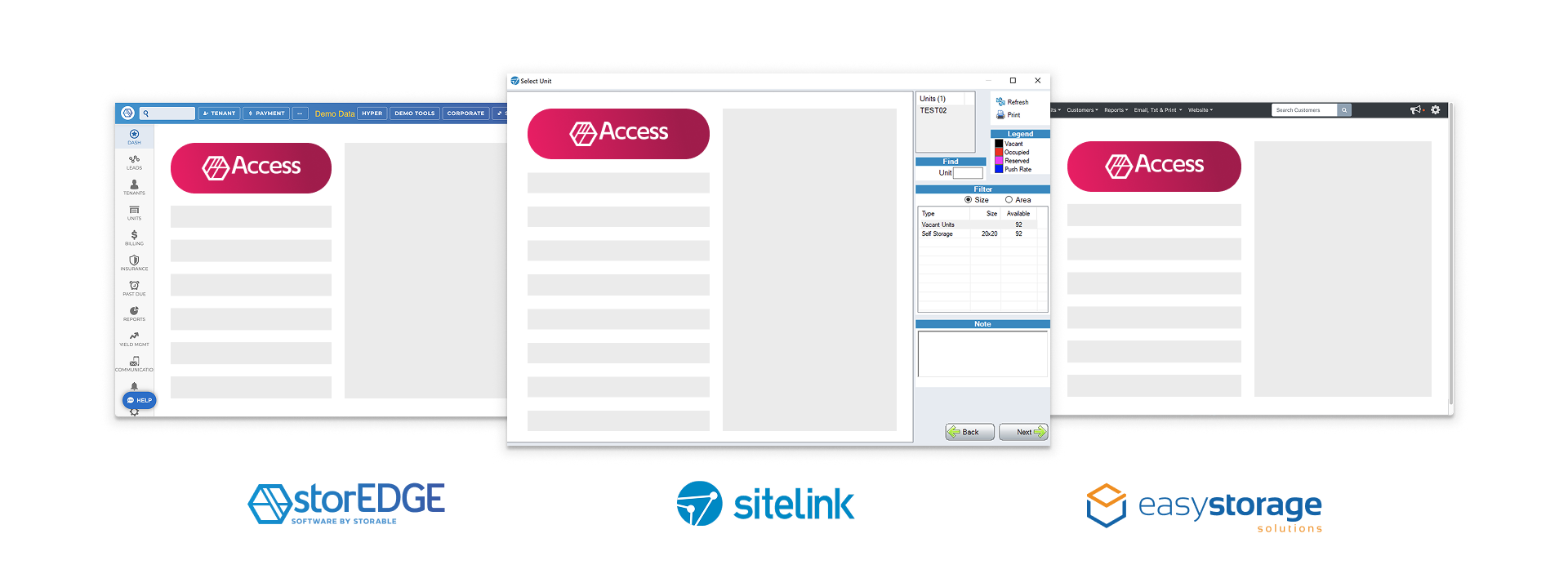
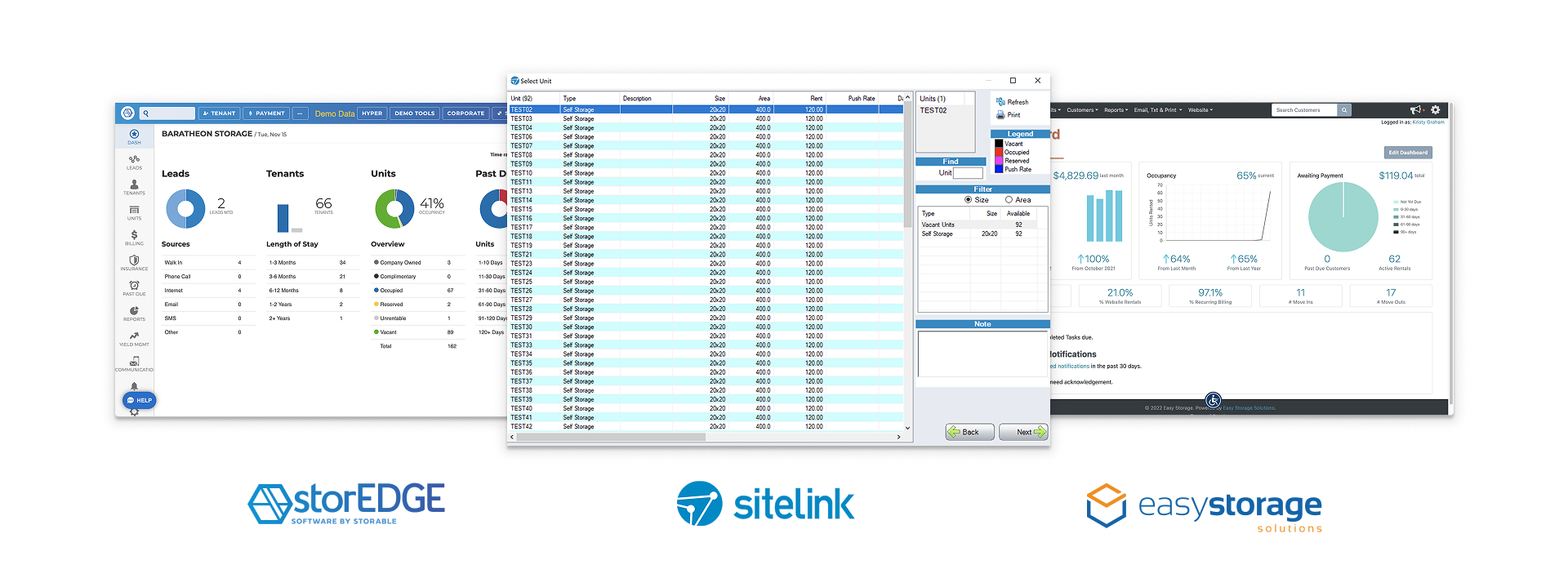
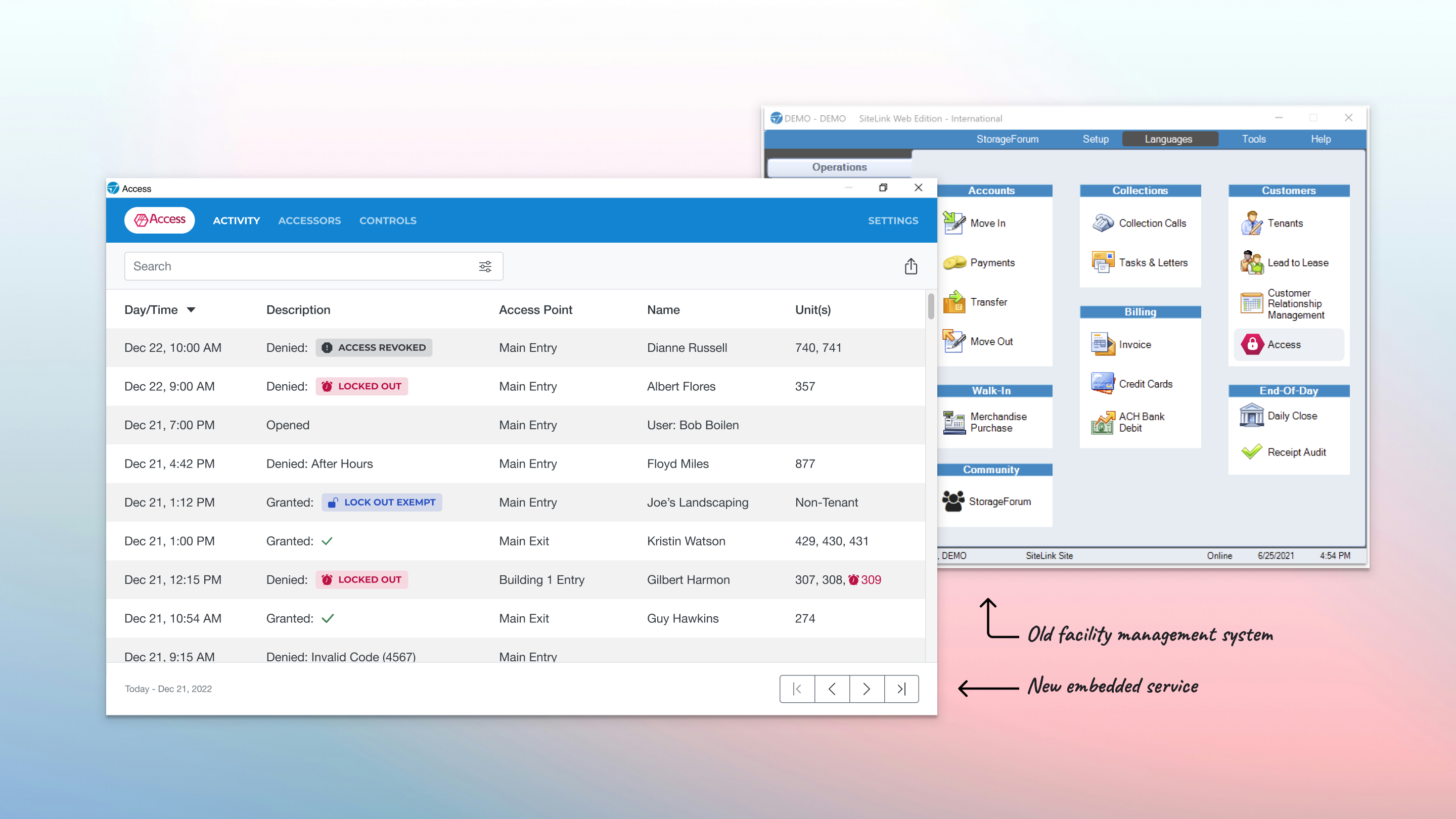
This was a greenfield project with no foundation to build from. Instead of creating another product specific integration, we defined a single system that could work across Storable's products. We aligned on a shared backend and an embeddable micro front end (MFE) so the experience could live within existing tools. We scoped a focused MVP within SiteLink, Storable's largest product, to move quickly while reaching the most customers. From there, research and testing guided what we prioritized and how the system evolved.
Research & Insights
I talked directly with customers to understand how access control fits into day-to-day operations and determine the solution essentials.
Access needed to be automatic, not assigned

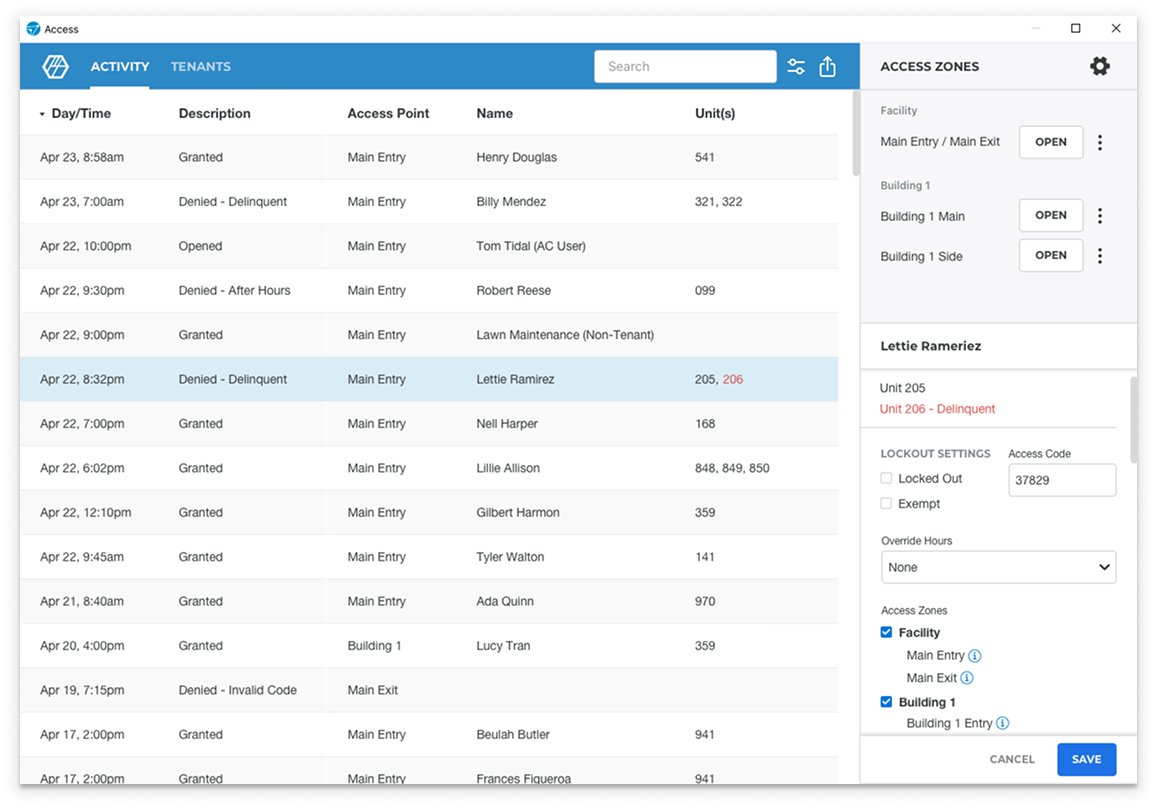
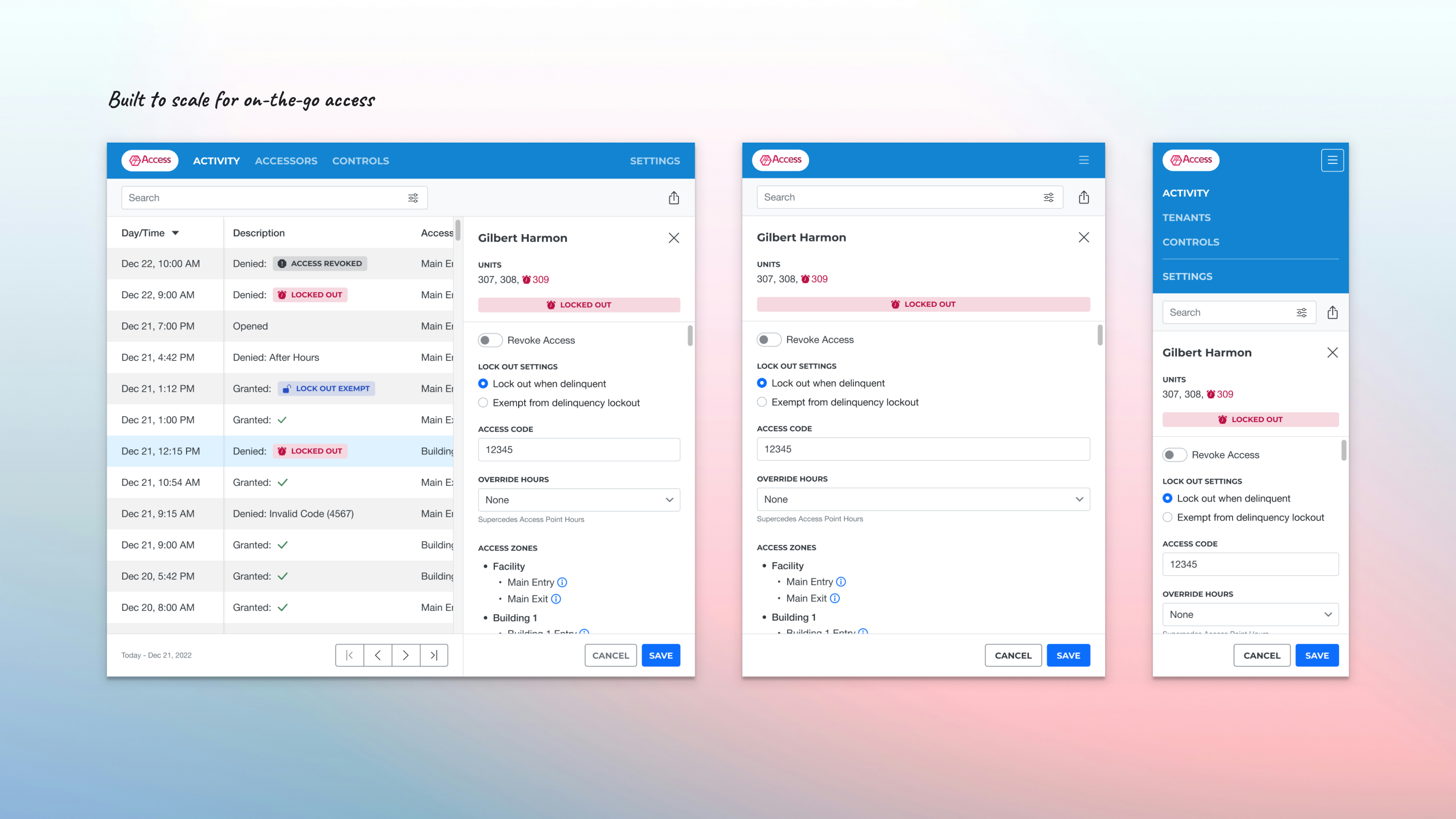
What stood out wasn't a need for more features, it was how much manual work was required to manage access. Operators were manually granting and removing access based on tenant status. This was time-consuming and error-prone, especially when tenants moved in or became delinquent. This led us to prioritize automatic privilege management tied to tenant and unit data.
Operators needed visibility into access activity

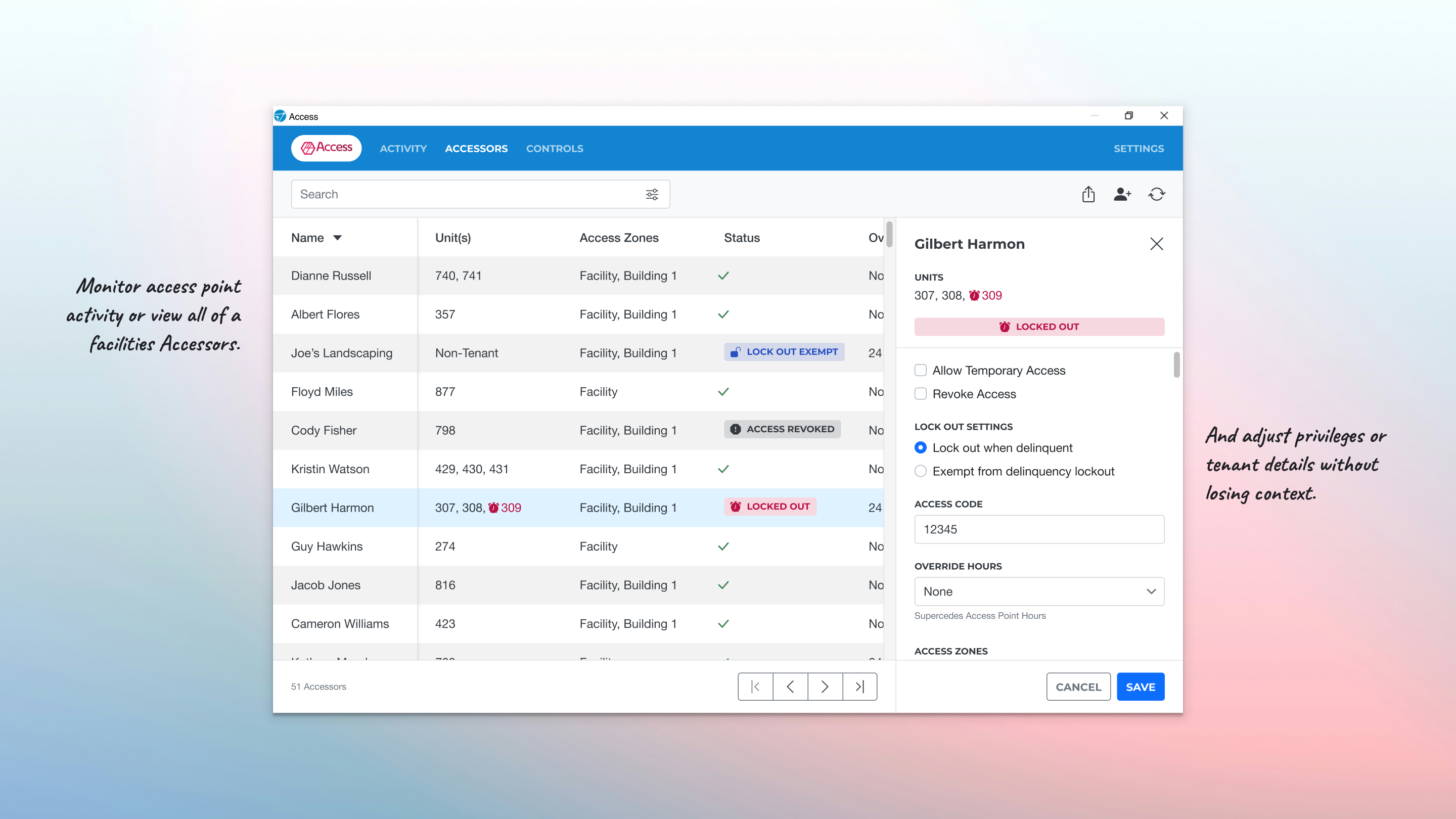
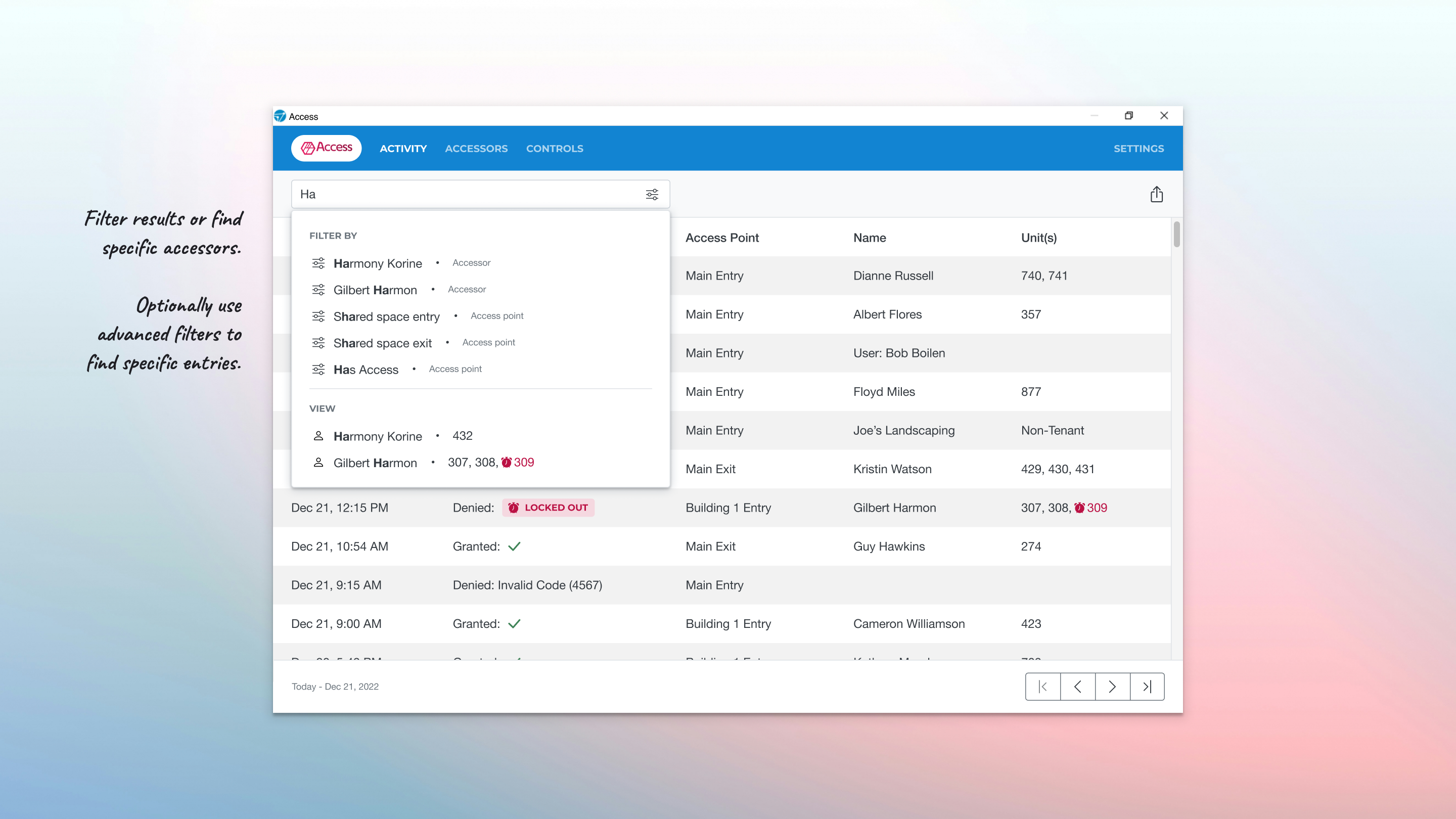
When issues occurred, there was little insight into who accessed what and when. This drove the need for activity logs that captured access events for both tenants and non-tenants.
Manual control was still necessary, but infrequent

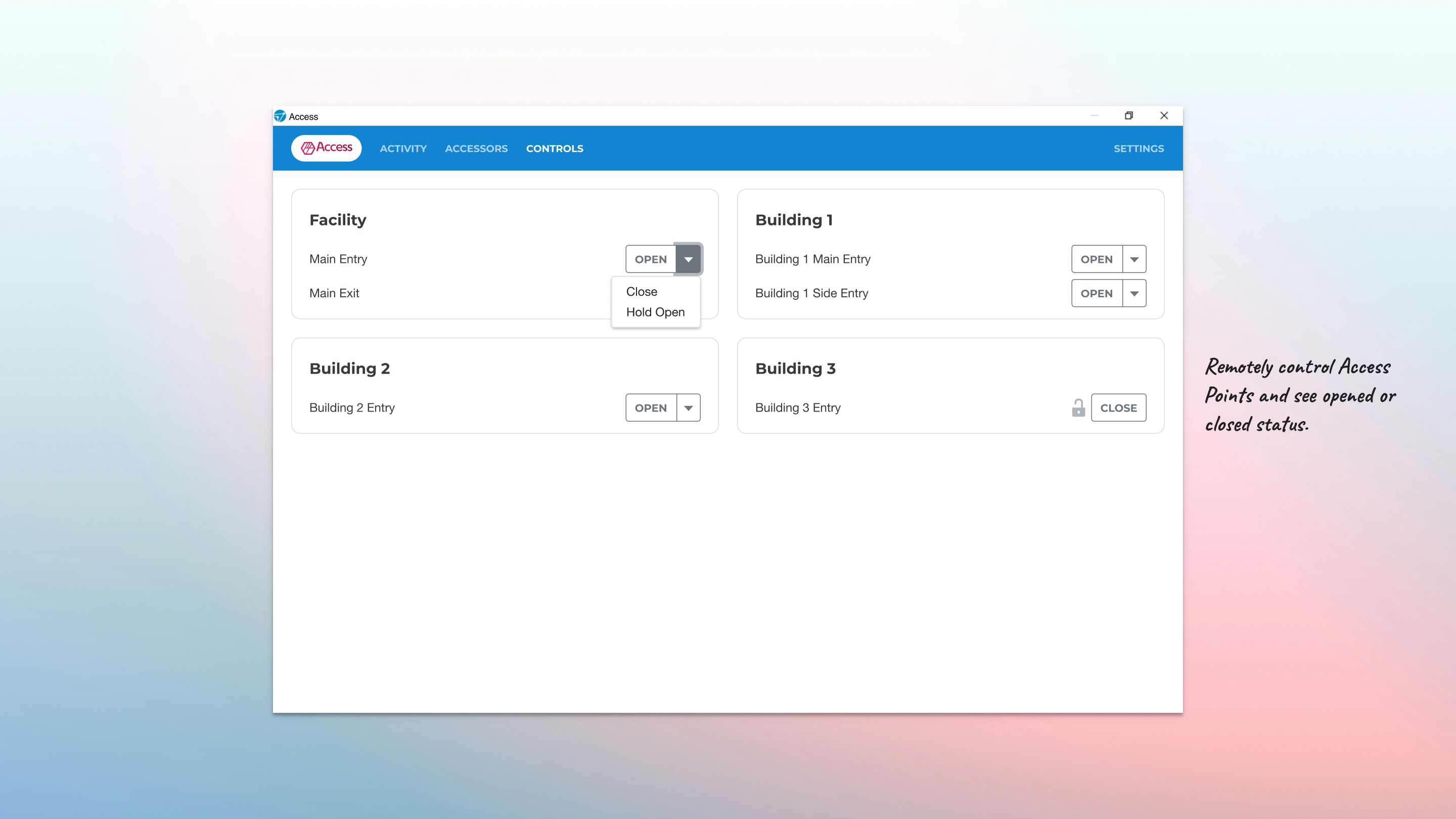
While most access could be automated, operators occasionally needed to intervene, for visitors or edge cases. Early concepts elevated these controls, but testing showed they were rarely used. We de-emphasized them in the interface and focused on automation first.
Access should reflect how facilities are structured

Operators thought in terms of units, buildings, and tenant attributes, not individual access points. This informed how we approached grouping and assignment, leading to a system that could scale without manual configuration. These insights shaped a system that reduced manual work, prioritized automation, and aligned access control with how facilities actually operate.
A Scalable Foundation
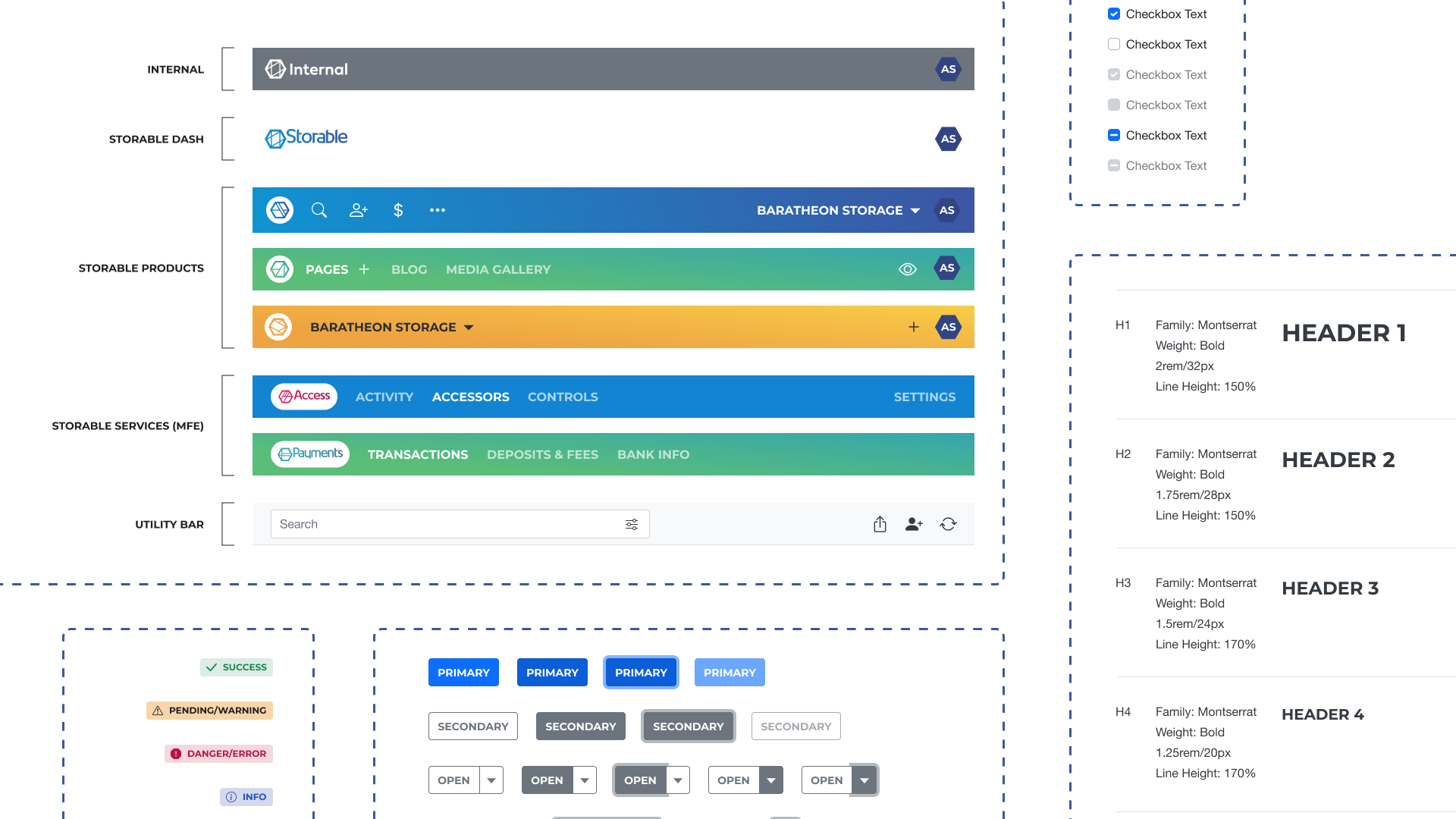
Storable's core products had evolved independently, each with its own patterns and behaviors. As new services like Access emerged, there was no consistent way to integrate them without adding more fragmentation. To address this, I established Storable's first shared design system. The system brought legacy products in line with the latest brand guidelines, creating a cohesive foundation where core products served as the base layer and add-on services could integrate seamlessly. Now marketing matched reality, and reusable components and patterns built on Bootstrap could be used across products instead of rebuilding from scratch. Subtle details, like loading animations inspired by each product's visual identity, reinforced a unified experience across the ecosystem.
Defining the System: Access Zones
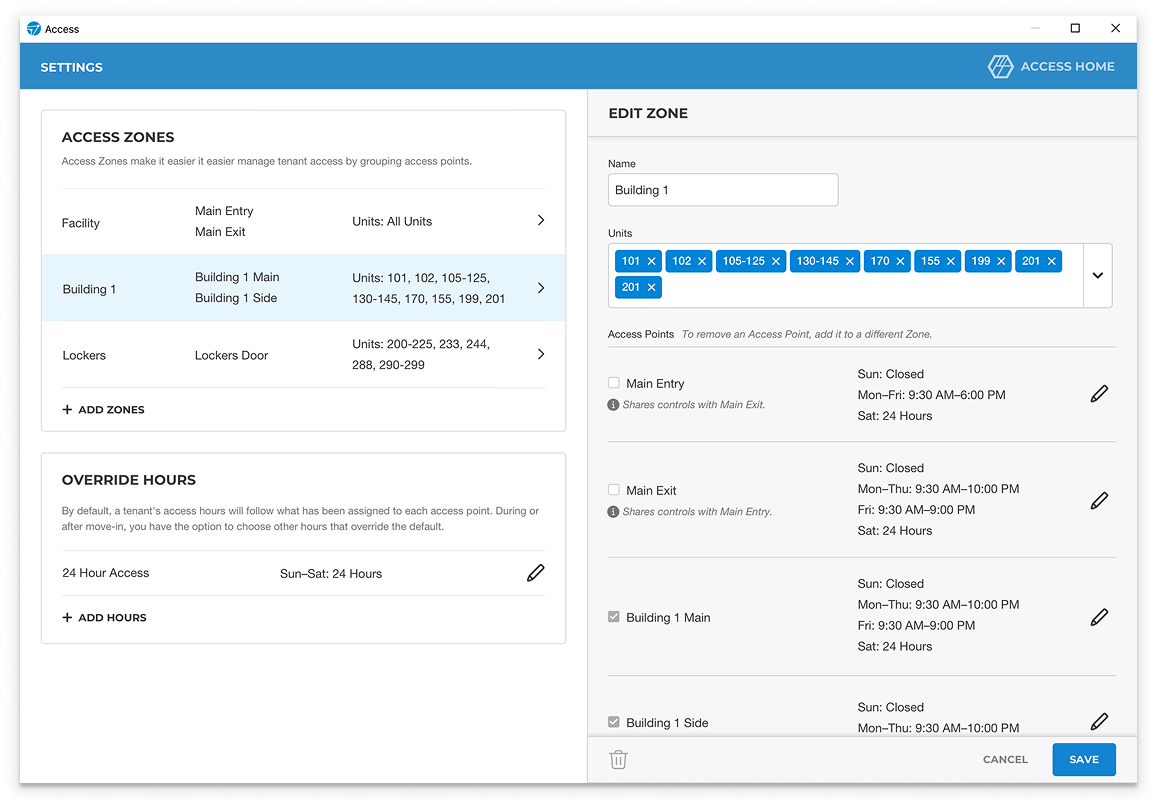
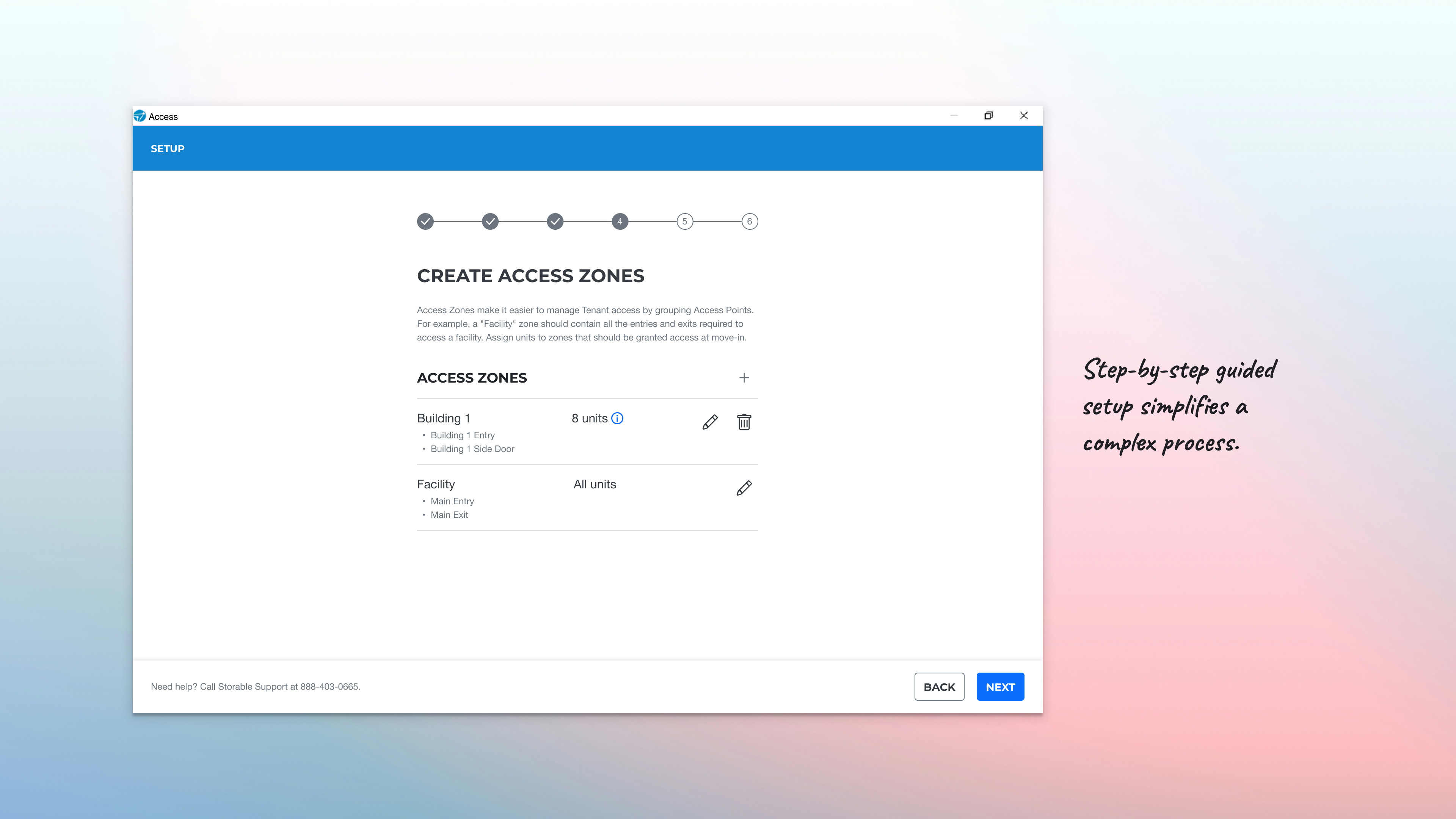
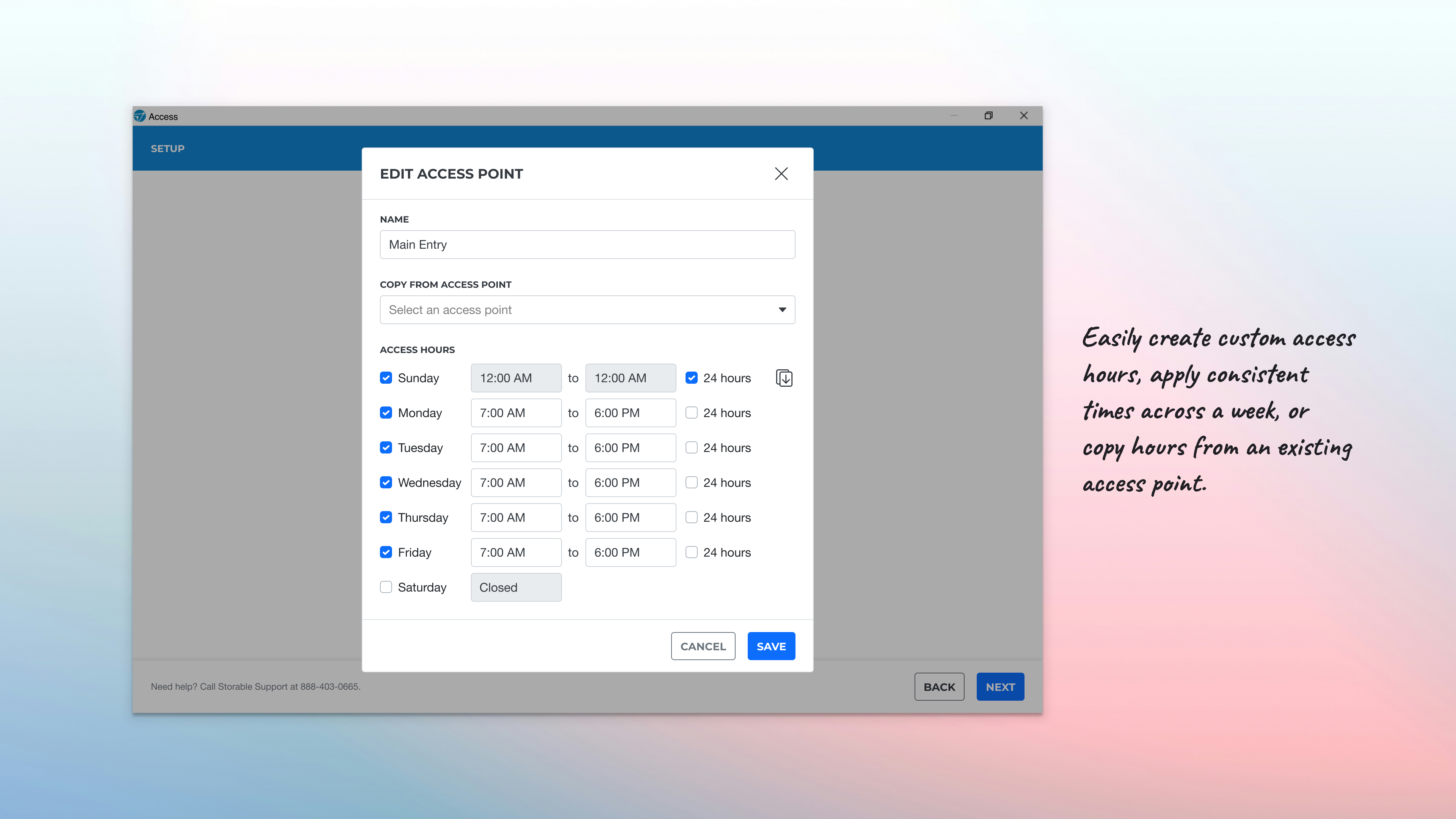
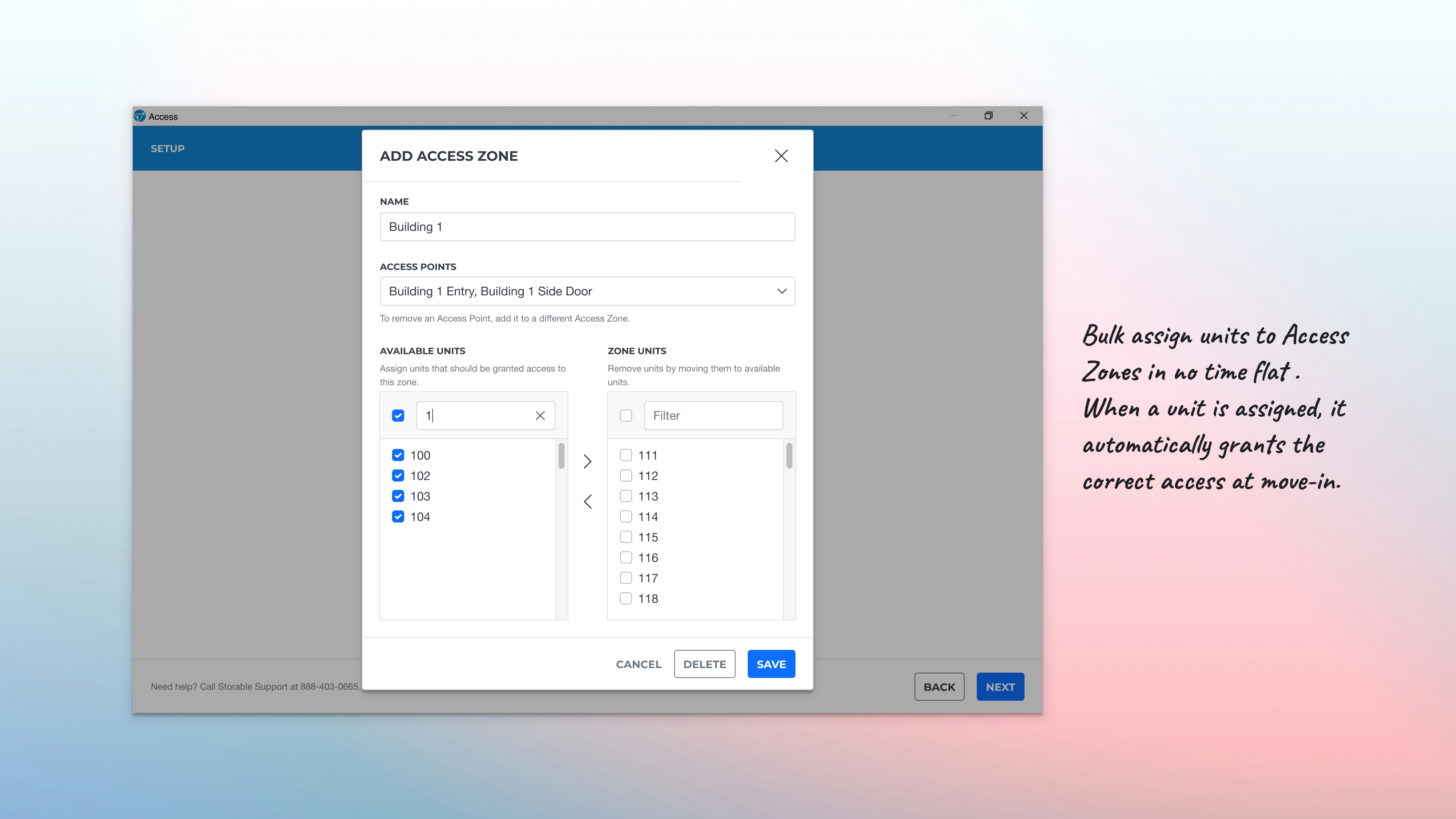
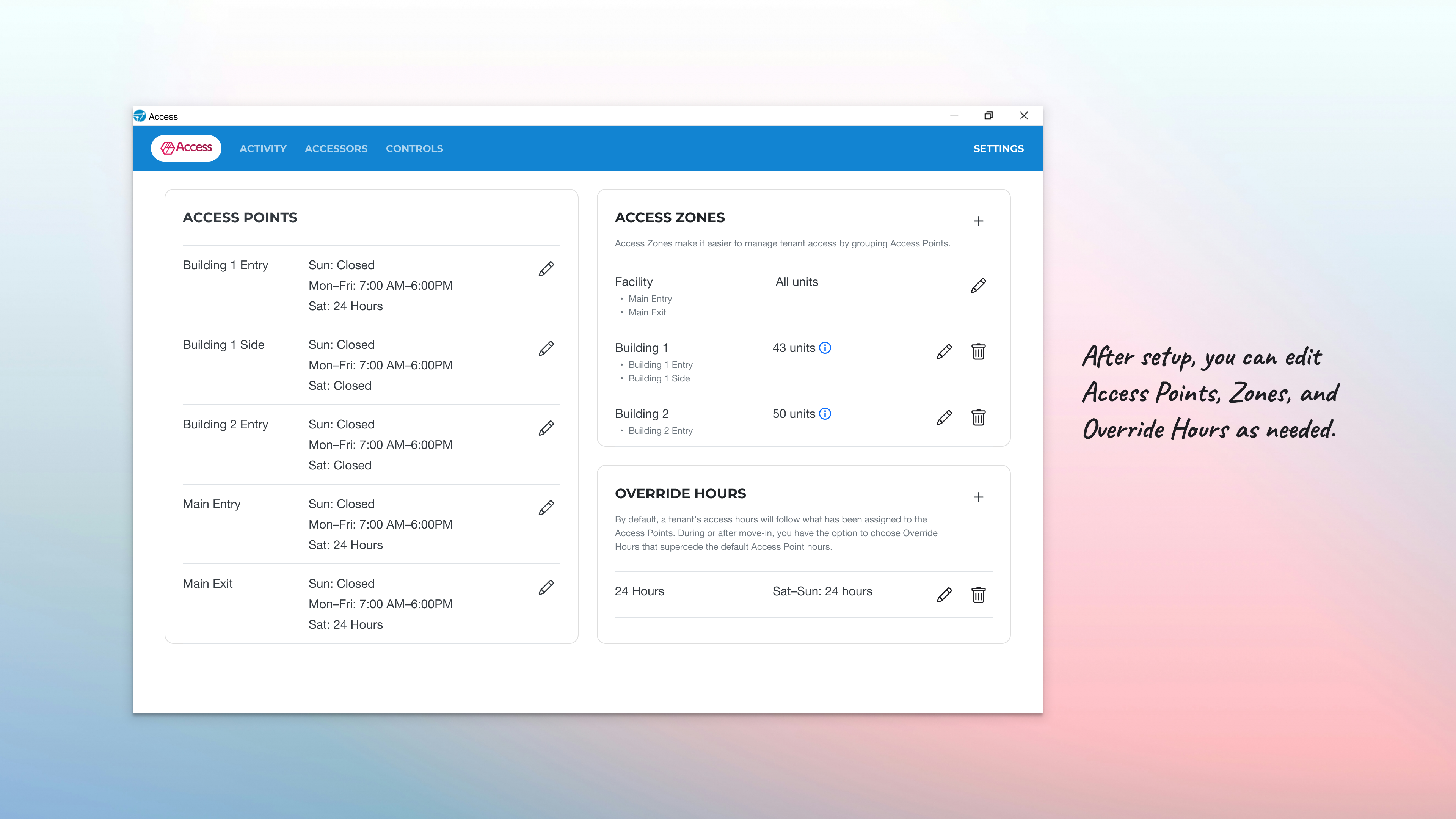
A core challenge was handling real-world access rules without making the system harder to manage. Most systems required operators to manually assign both access points and access hours at move-in. This manual process was not only time-consuming but error prone. We introduced the concept of overlapping Access Zones, where units belong to groups that define both access and timing. A facility-wide zone might allow 24/7 gate access, while a building zone restricted entry to specific hours. When a tenant was assigned a unit, access was granted automatically based on its zones.
- Access and timing were assigned together
- Facility, building, and unit rules worked by default
- Fewer errors and exceptions to manage
Access Zones turned a manual setup process into something the system could handle automatically.
The Solution
In less than a year we launched our MVP to great interest from our Storable pipeline. It included a step-by-step, self-guided setup experience for the moment of build or acquisition, when access control decisions are made. The service was built directly into Storable's facility management products, where billing and occupancy are managed. This allowed access to be tied directly to tenant and unit data instead of managed as a separate system. Once set up, tenant access was handled automatically through Access Zones, removing the need for manual configuration at move-in. Operators could monitor access activity and manage facilities remotely. Replacing fragmented third-party integrations with a Storable-built system strengthened Storable's position as a more complete facility management solution. This made the system easier to adopt upfront and easier to manage day to day.
“You guys nailed it.”
— Operations, TNT ManagementImpact
In addition to reducing reliance on third-party integrations and removing support overhead, the product gained traction quickly:
- 201 facilities onboarded in the first 6 months
- $18K monthly recurring revenue
- 54% attach rate (vs. 33% target)
- 25+ new facilities added per month
The opportunity continues to scale:
- 4,000+ facilities in the pipeline
- $400K potential MRR ($4.8M ARR)